
Prepare
Personnel readiness, role requirements, posts, sectors, and command constraints are settled before a single order is drafted.
Deployment discipline for complex public safety operations.
We build DDMS, we deploy it, and we upgrade it alongside the departments that run it. One system carries personnel readiness, roster planning, duty orders, field acknowledgement, live command, and deployment review. It has been in departmental service for more than five years.
Duty management is not calendar scheduling. It is the controlled allocation of trained people against geography, risk, availability, fatigue, equipment, and command intent. We built DDMS for that problem and we maintain it as institutional infrastructure, with more than five years of upgrades shaped by the departments that use it every day.
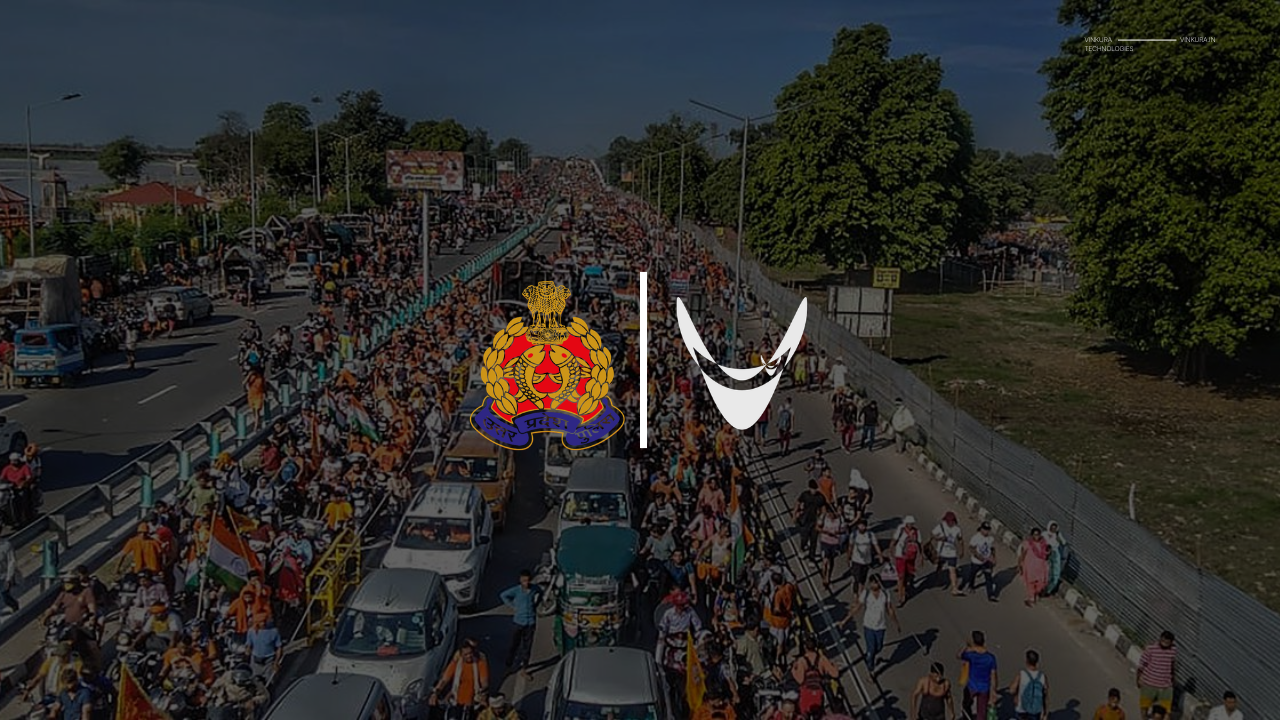
Move the divider from a duty room built around registers and pinned sheets to one live board for rosters, coverage, and acknowledgement.
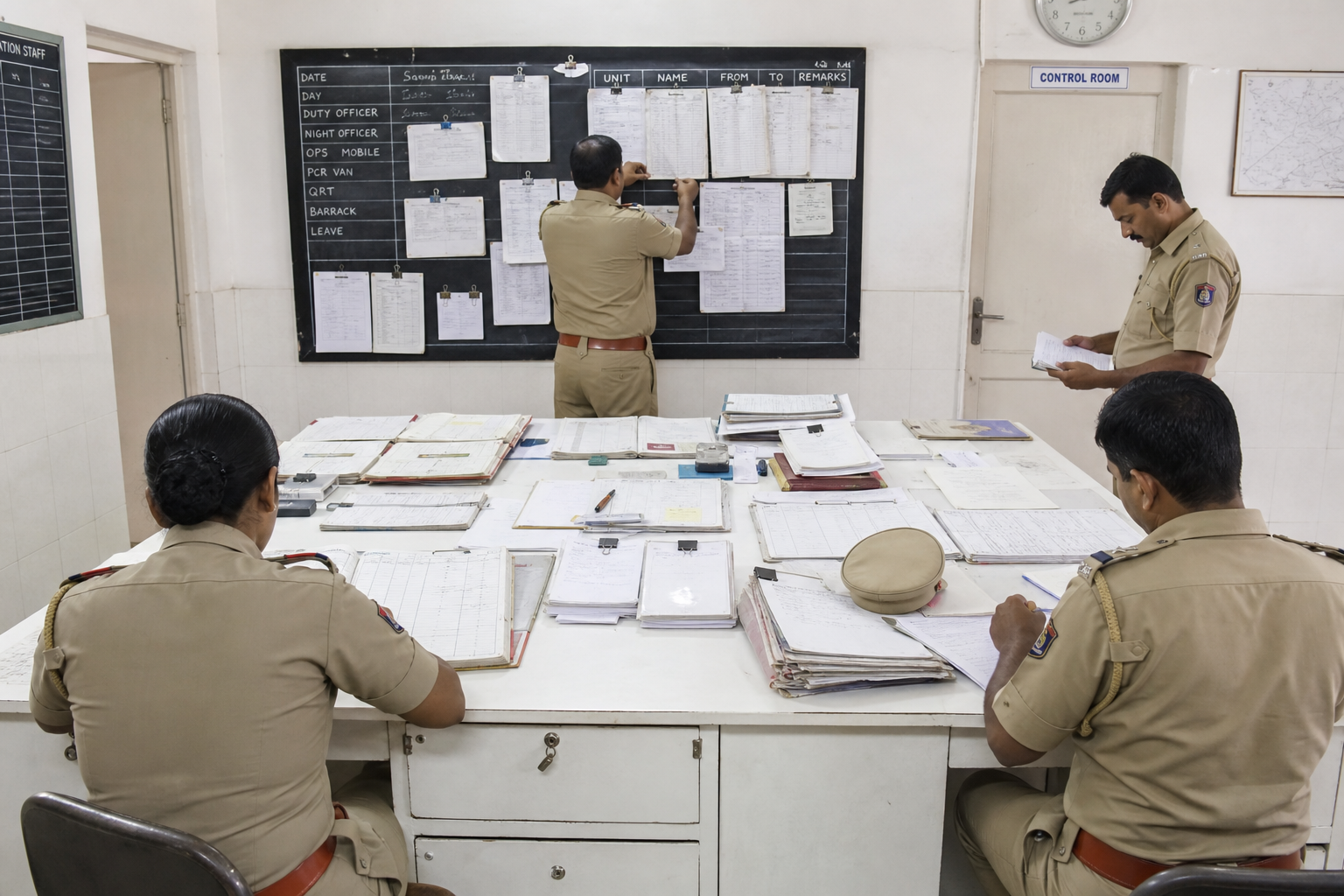
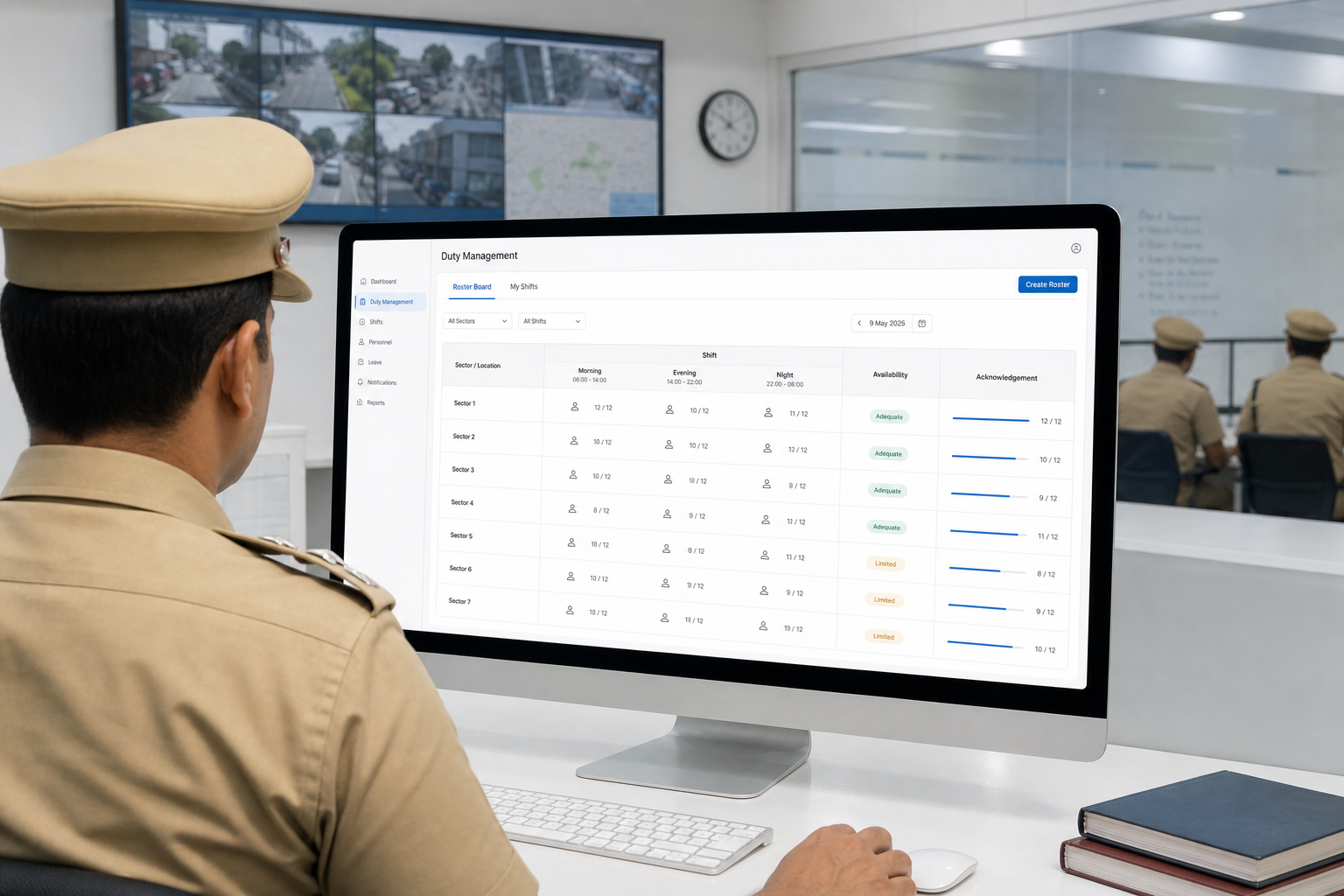
These diagrams show how DDMS holds the same duty record in the field and at command. They are explanatory pictures, not a live dashboard.
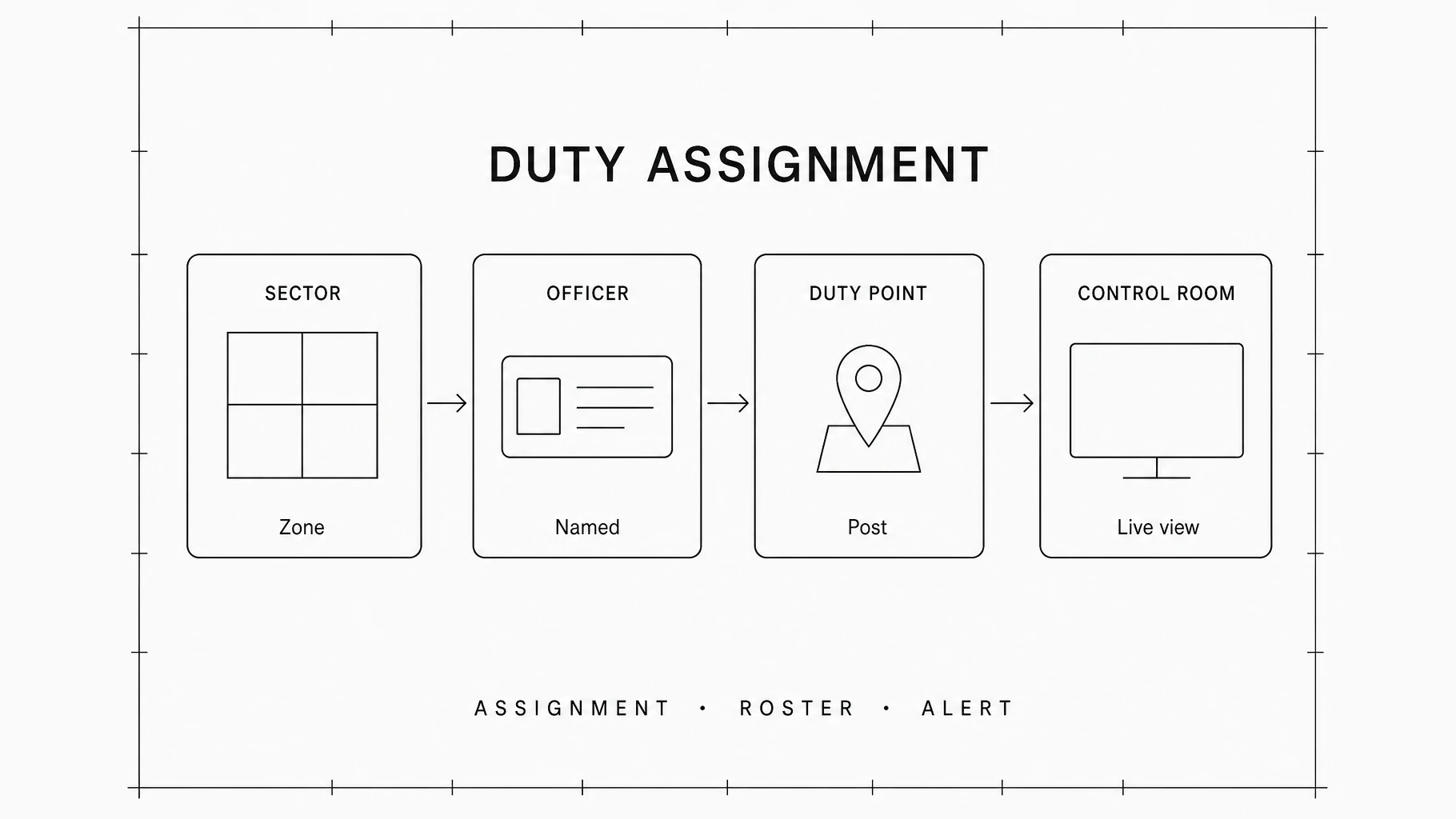
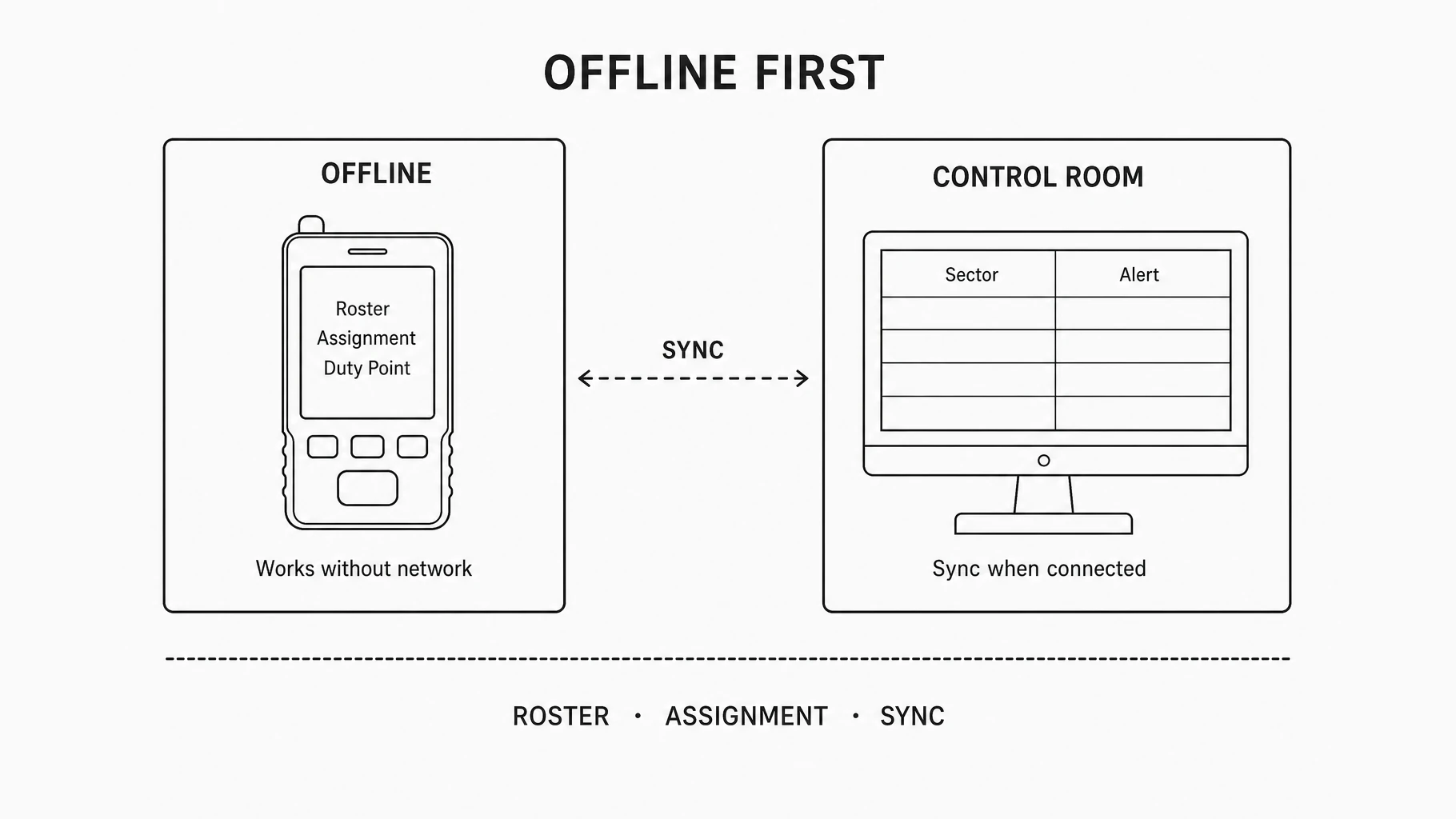
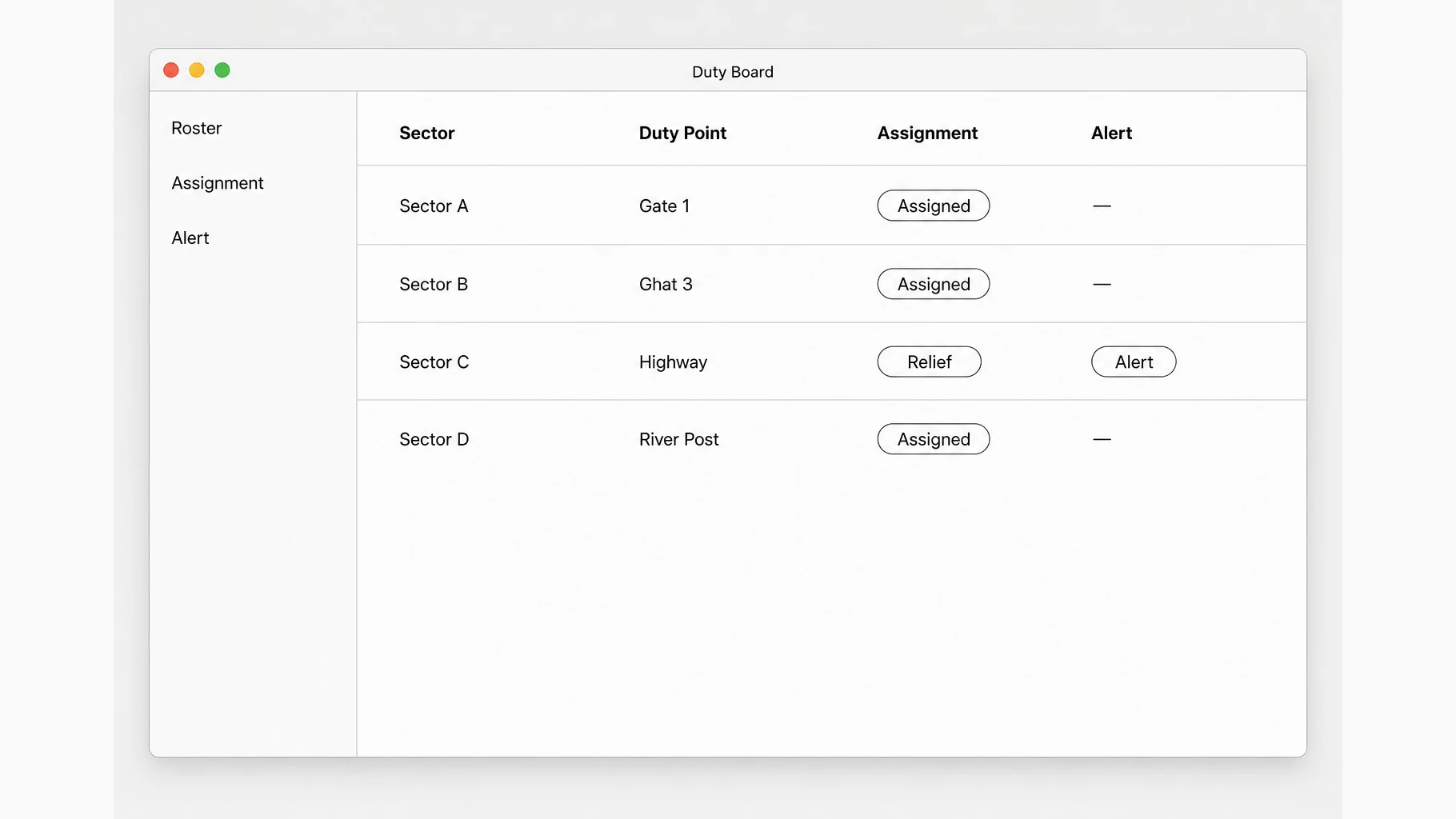
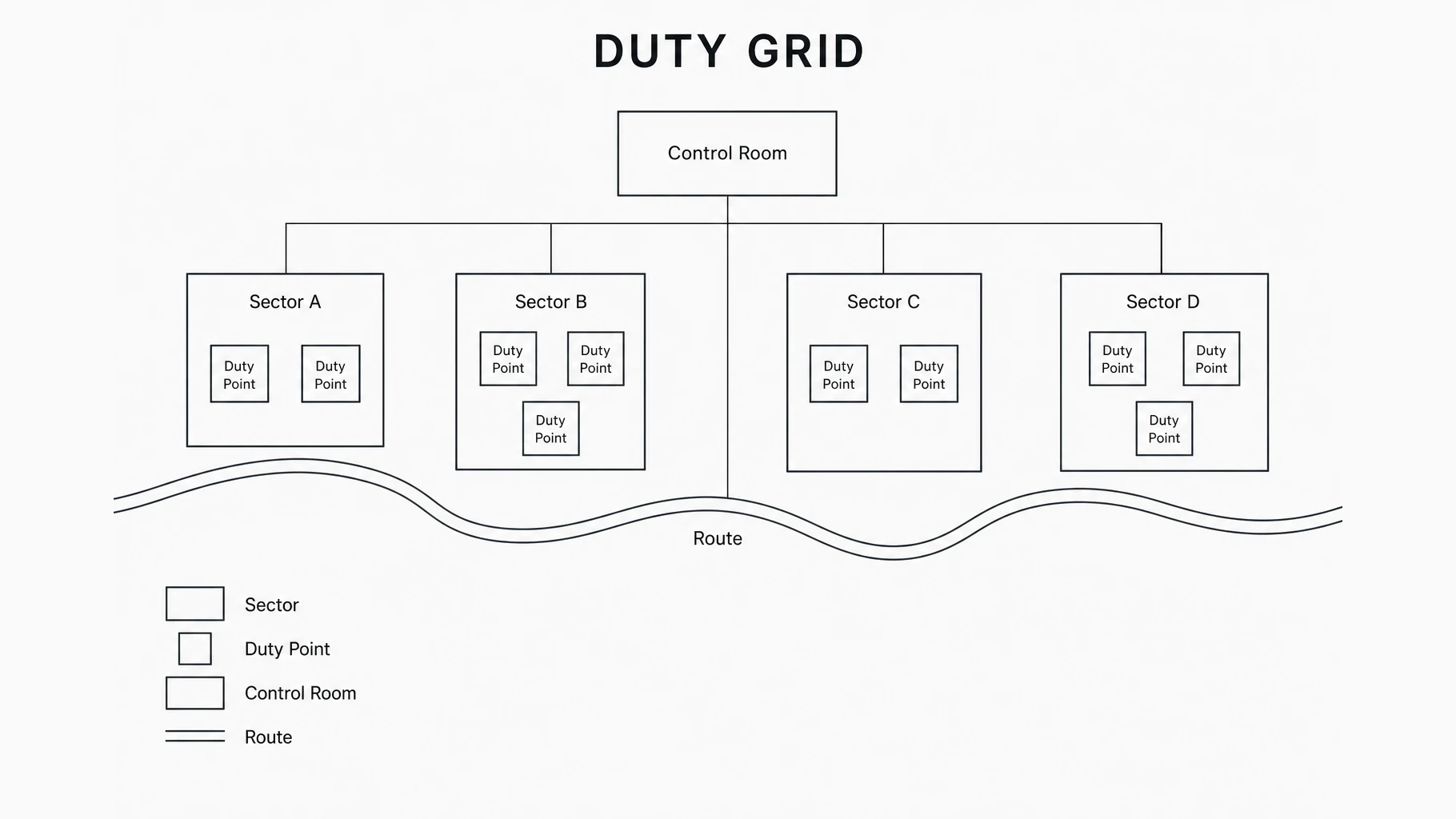
Four stages, one operating record. Every duty moves from plan to relief without leaving the system, and nothing depends on a register that only one person can read.
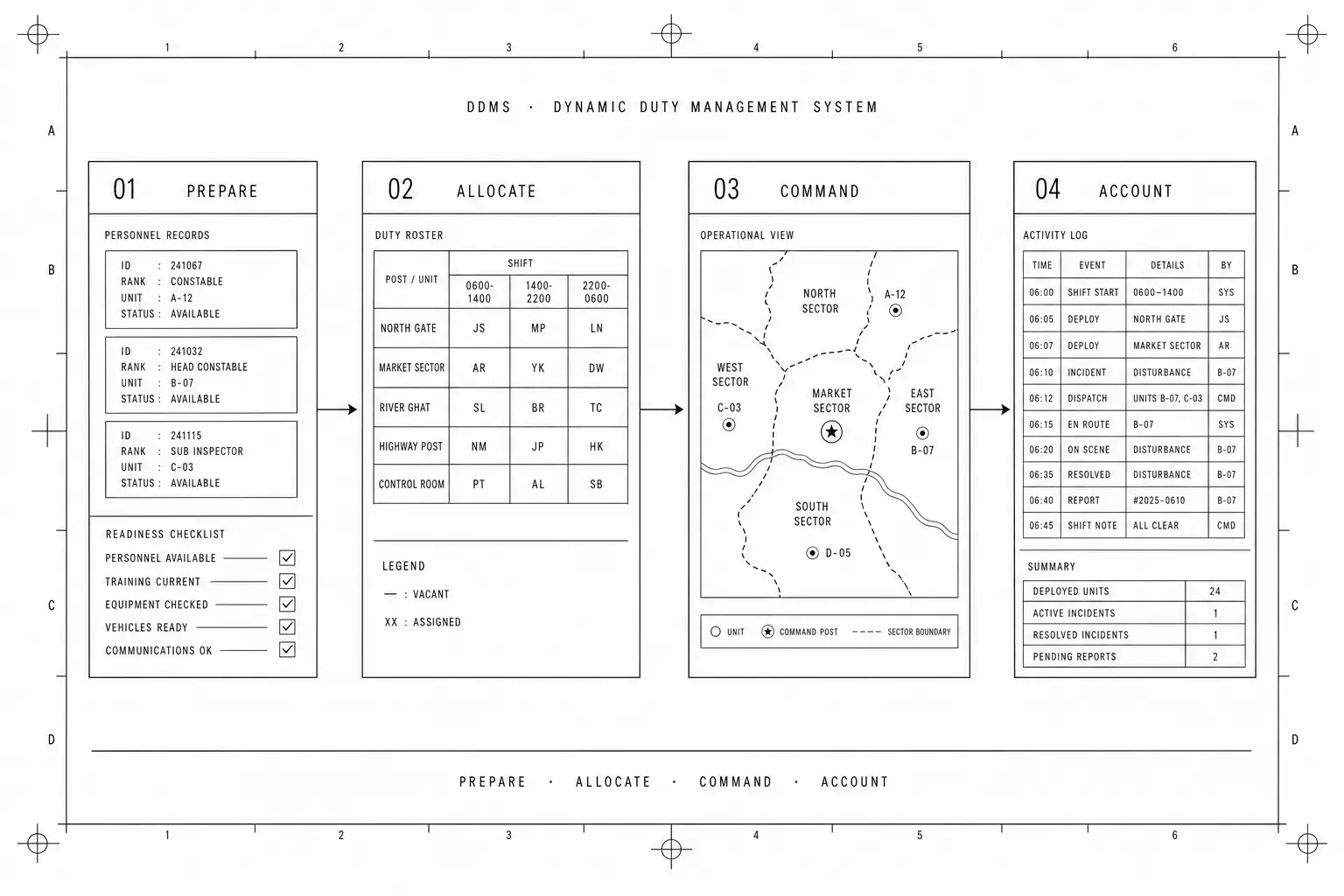
Personnel readiness, role requirements, posts, sectors, and command constraints are settled before a single order is drafted.
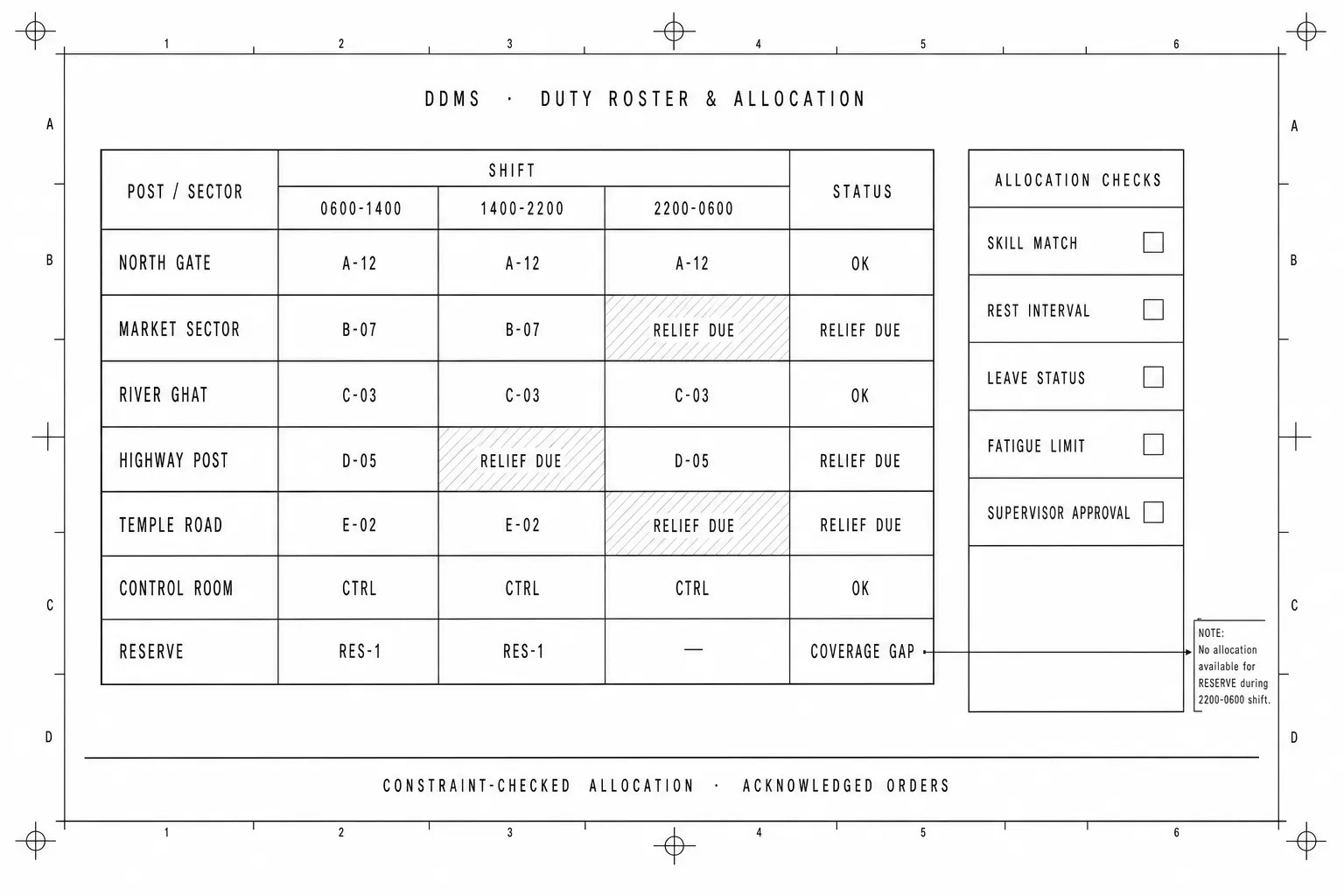
The duty plan is built and reviewed against skills, availability, rest intervals, workload, and operational priority.
Orders go out with an owner attached, acknowledgements come back, substitutions are handled, and command holds a live picture.
The final roster, exceptions, approvals, and attendance stay on the record for supervision and after-action review.
Rank, unit, skills, training, availability, restrictions, and service context in one authorised view, so allocation starts from facts instead of memory.
Duties built against posts, sectors, shifts, role requirements, and operational priority, for routine days and for event-scale operations alike.
Availability conflicts, excessive duty, missing qualifications, and coverage gaps surface before orders are issued, not after a shift fails.
Every order carries the assignment, reporting point, shift, supervisor, and acknowledgement status, and it reaches the officer who has to act on it.
Planned, acknowledged, reported, relieved, and exception states tracked across the whole operation from one command surface.
Substitutions, delays, absences, handoffs, and command changes can be read back against the final deployment, each entry timestamped.
Most departments still run deployment on paper registers, spreadsheets, and message groups. This is what each part of the job looks like on either side of that change.
| Operational task | Registers and spreadsheets | With DDMS |
|---|---|---|
| Roster preparation | Built by hand each cycle, checked against whatever the planner remembers. | Drafted against skills, leave, duty limits, and rotation, then put to a supervisor for review. |
| Issuing orders | Circulated on paper, by phone, and through message groups. | Issued to the named officer with post, shift, reporting point, and supervisor attached. |
| Acknowledgement | Assumed once the order has been sent. | Recorded the moment the officer accepts the order. |
| Substitutions | Agreed informally between officers and rarely written down. | Logged with the authority who approved it, the reason, and the time. |
| Rest and fatigue | Visible only to whoever is holding the register. | Checked against duty limits and rest intervals before the order goes out. |
| Weak connectivity | Updates stop when the signal stops. | Field nodes keep working offline and reconcile with command on reconnect. |
| Exceptions | Surface after the shift, if they surface at all. | Flagged to command while the shift is still running. |
| After-action review | Reconstructed from scattered paper and personal recollection. | Read straight off the deployment record. |
Roster preparation that used to take hours of register work becomes a review task. DDMS drafts the allocation against force size, skill tags, leave status, duty limits, mandatory rest, and fair rotation, then hands the supervisor a plan with the conflicts already flagged.
Command keeps full override. Every override, substitution, and approval is written down with a timestamp and the authority behind it, so who is deployed where is a matter of record, and an unaccounted absence is visible instead of quietly absorbed.
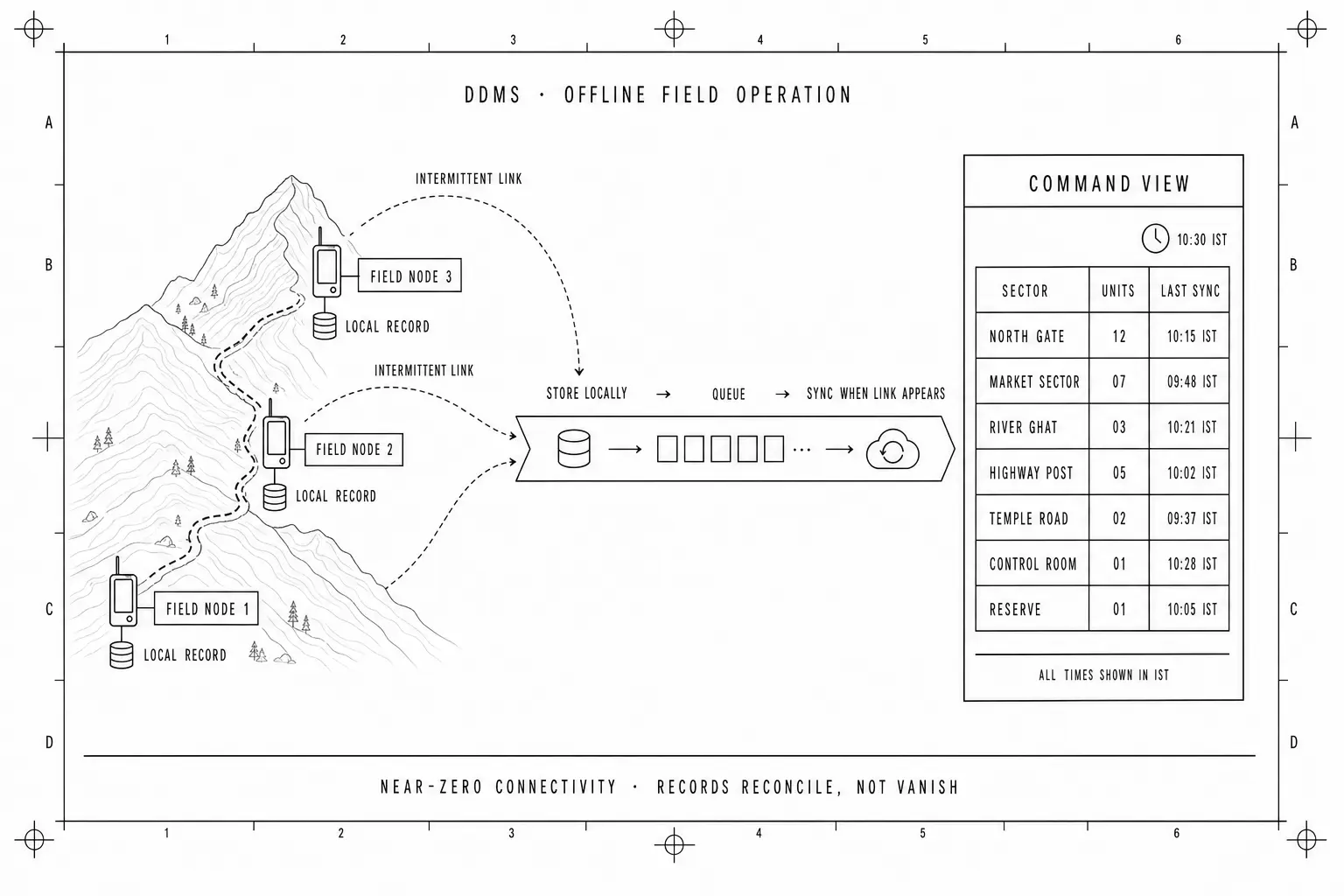
Duty does not pause when the signal drops. DDMS field nodes hold structured records locally, queue updates, and synchronise the moment any path back to command appears. Acknowledgements, reports, and exceptions reconcile instead of disappearing.
We proved this in the field. The same offline-first architecture carried Trinetra through Shri Amarnath Ji Yatra operations, where a mobile workforce reported across high-altitude corridors with intermittent signal and long stretches of none.
Command dashboards follow every duty through an explicit lifecycle. Supervisors see coverage, acknowledgement, and exceptions across sectors as they happen, not at the end of the shift.
The duty exists in the approved plan, with its post, shift, and role requirement.
The assigned officer has received the order and accepted it, on the record.
Presence at the reporting point is confirmed and visible to command.
Handover is complete and the next assignment holds the post.
An absence, delay, or substitution is raised for supervisory action rather than lost.
DDMS is not a pilot. It runs in live police operations, from a national pilgrimage corridor to everyday district duty.
DDMS deployed for personnel discipline and multi-zone coordination at corridor scale, with offline field nodes and auditable duty records under constrained connectivity.
Read the deployment recordBareilly · District operationsDuty allocation, personnel visibility, and supervisory coordination on one shared operational record, in place of fragmented registers and message threads in daily district work.
Read the deployment noteInstitutions do not buy software once, they live with it. We maintain DDMS as long-term infrastructure: we carry the engineering, departments carry only the operation.
We replaced manual duty registers and spreadsheet rosters with one current, defensible deployment record for the department.
We moved duty orders, acknowledgement, and reporting onto mobile devices in the hands of a distributed field workforce.
We built offline-first field nodes with local records and reconciliation, and hardened them during Trinetra operations on high-altitude Yatra routes.
We added AI-assisted scheduling that drafts constraint-checked rosters for supervisory review, with human authority over every issued order.
Every operational season returns requirements to our engineering team. We upgrade DDMS rather than replace it, so departments carry no migration burden.
A briefing covers your duty environment, hierarchy, connectivity conditions, and the configuration and upgrade path we would follow in your context.