Weapon detection
Flag a visible weapon in a monitored area and put the frame in front of the officers responsible for that location, with the camera and time attached.
One visual intelligence layer, from the camera to the command room.
ARGUS is the system underneath the visual work Vinkura does for departments. It watches authorised camera, drone, and field imagery, puts what it finds in front of a person, and carries the confirmed result into command. Hawk-Eye and Eagle Eye are both powered by ARGUS.
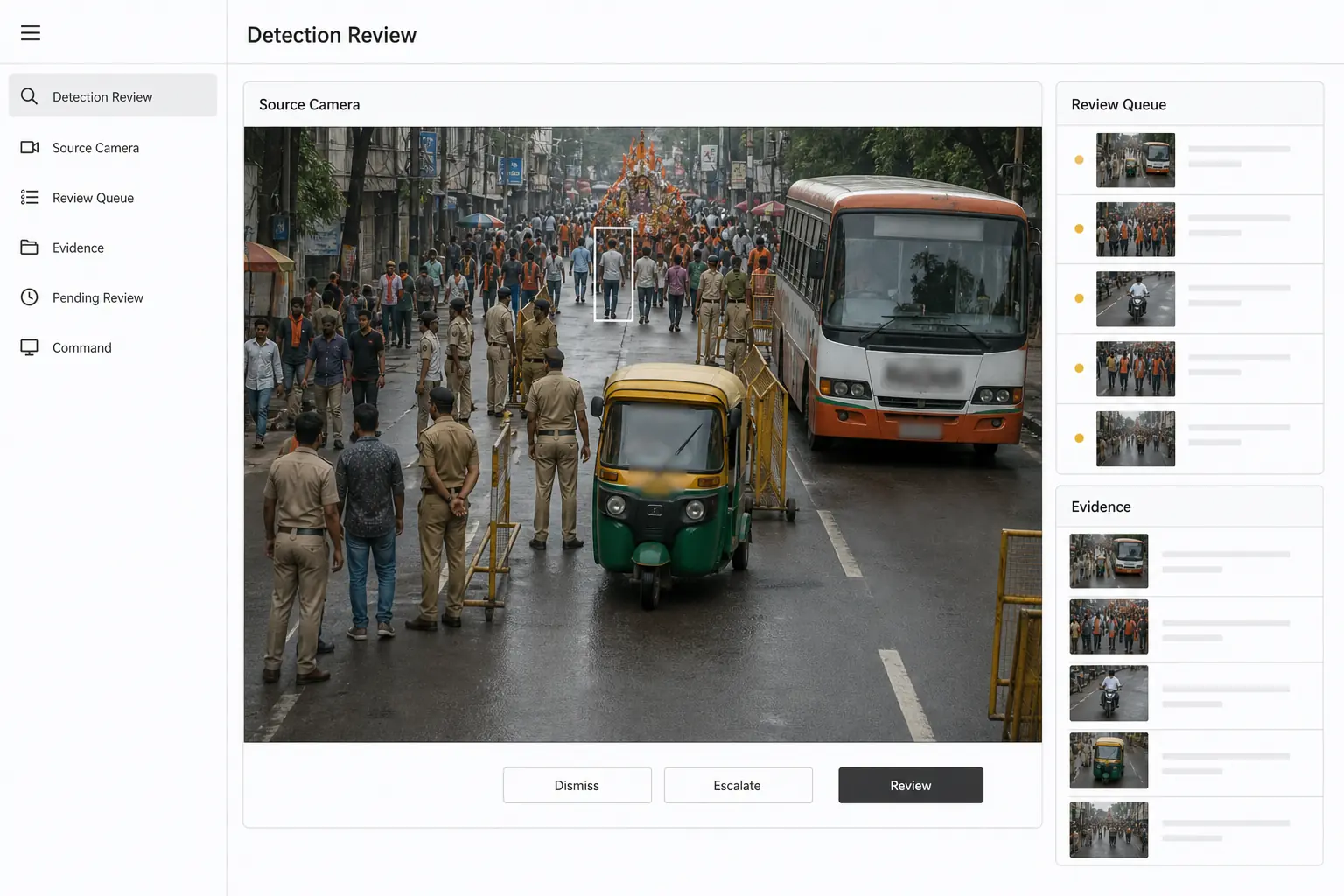
Most departments are not short of cameras. They are short of a way to turn what those cameras see into something an officer can act on and a supervisor can check afterwards. ARGUS is that layer. It takes authorised imagery, applies the detection a department has configured, and hands the result to a person with enough context to judge it. Everything after that — the alert, the task, the map, the audit record — runs through AEGIS alongside the rest of the operation.
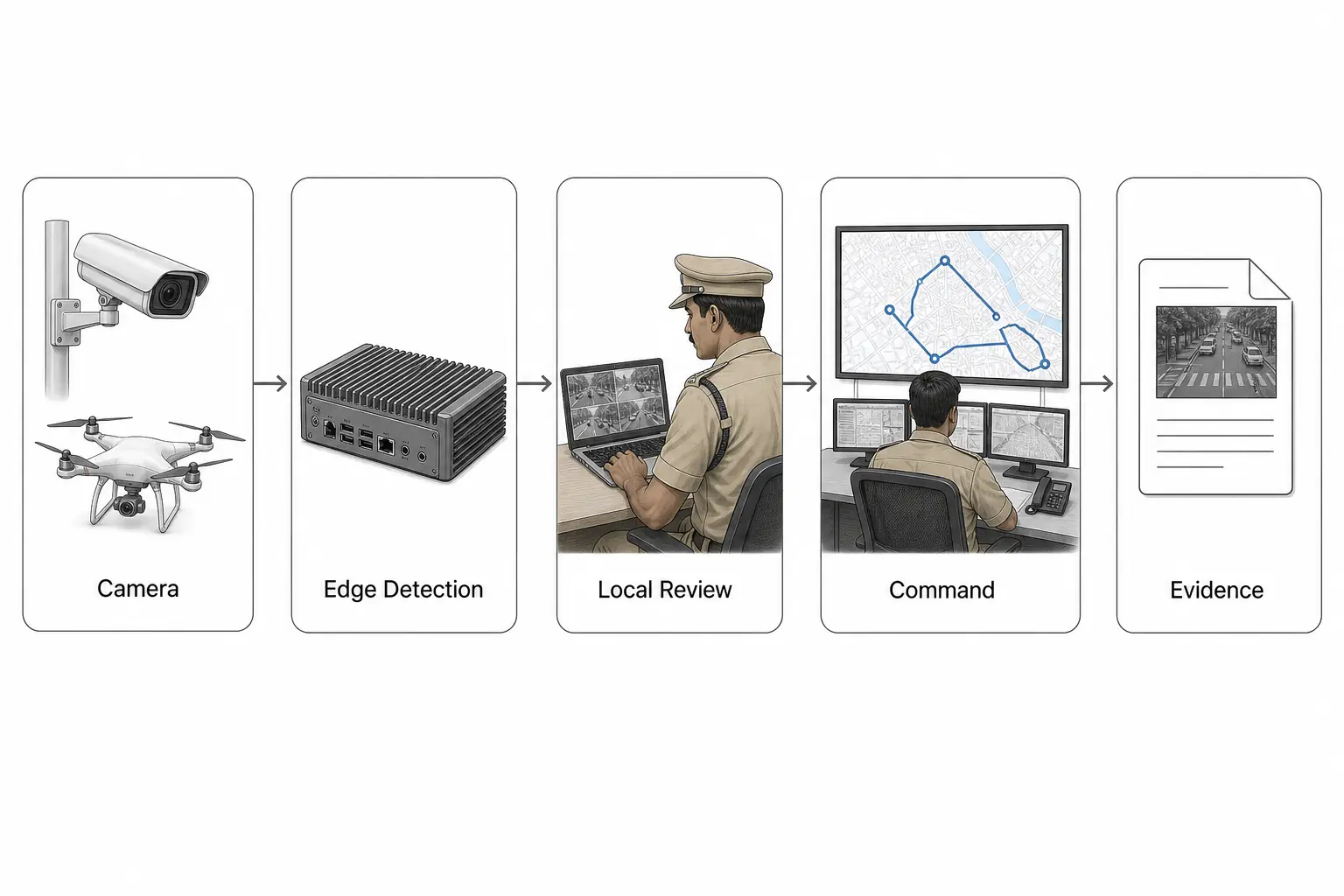
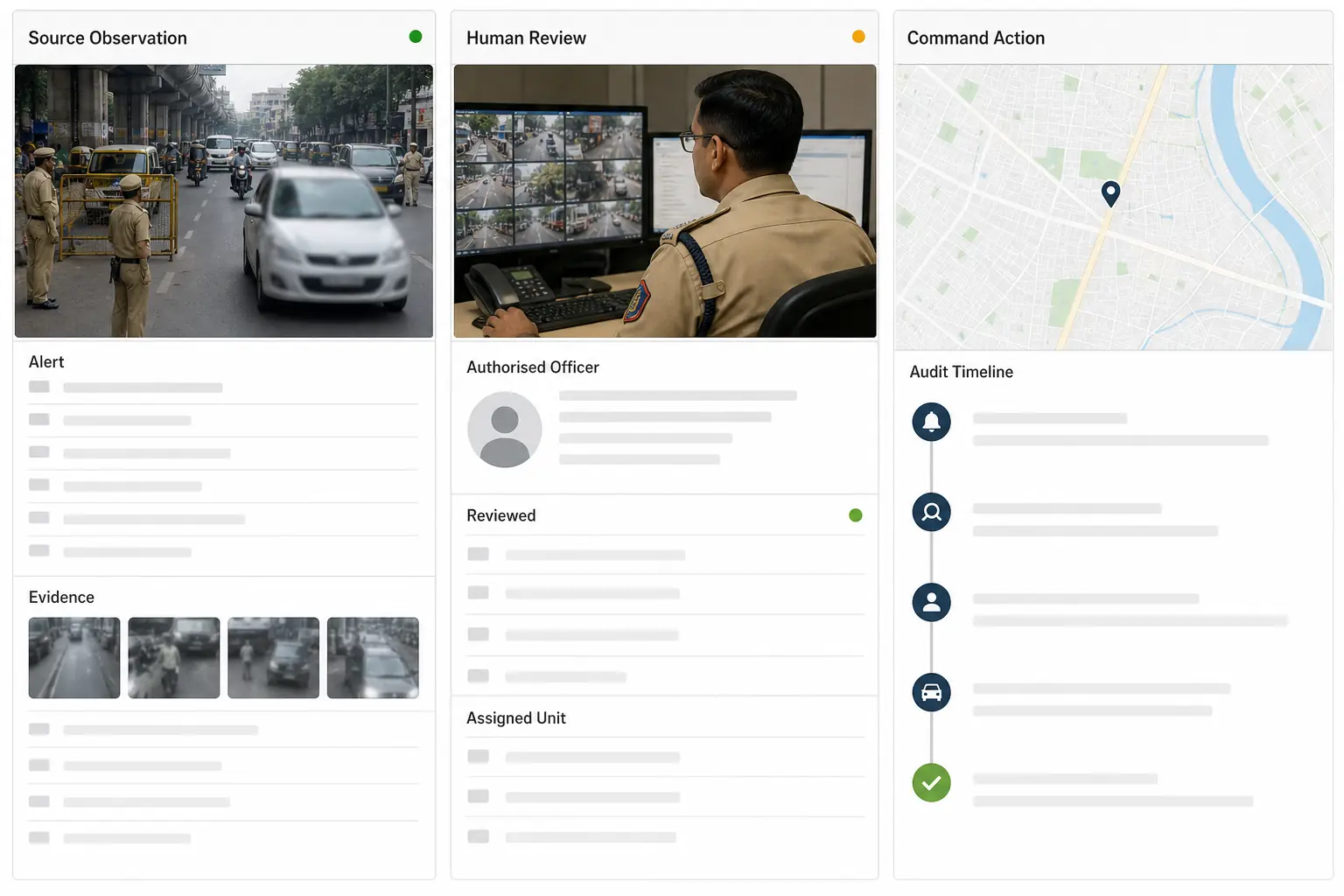
The path is deliberately short and deliberately visible. Each stage hands the next one the source it came from, so nothing arrives in the command room without a way to check it.
Authorised cameras, drones, and field devices produce the imagery. Nothing new has to be installed where a working camera network already exists.
Hawk-Eye runs next to the camera or on the field device, so a frame does not have to travel across the network before it becomes useful.
What the model surfaces reaches an officer as a candidate, with the source camera, the time, the place, and the surrounding footage attached.
A confirmed observation moves through AEGIS into the command picture: the incident, the map location, the unit assigned, and the task raised.
The frame, the reviewer, the decision, and everything done afterwards stay in one record that a supervisor can reconstruct later.
Flag a visible weapon in a monitored area and put the frame in front of the officers responsible for that location, with the camera and time attached.
Compare people appearing in authorised footage against a watchlist the department maintains, and present a candidate for an officer to assess.
Support investigative identification work across authorised material. ARGUS narrows the search; the identification itself remains a human decision on the record.
Watch build-up, density, and movement at a corridor, gate, or junction so the control room sees pressure forming rather than hearing about it afterwards.
Check mounted sound systems on procession routes against the height permitted for that route, so a compliance call can be made from the feed.
Beyond these, ARGUS runs the visual checks a department configures with us for its own operating conditions, using the same compact model rather than a separate heavy system for each job.
Size is not a technical footnote here. A model small enough to sit beside a camera changes where detection can happen, how much of a district can be covered, and what has to be spent to cover it. Hawk-Eye is built to stay small while carrying the full range of checks a department has configured.
A 10 MB model fits on the kind of small compute a department already puts in the field — an edge box beside a camera, a checkpoint kit, a vehicle-mounted unit. No specialised server per site.
Detection happens where the imagery is captured, so a route with a weak or intermittent link is still a route that can be watched. Only what matters needs to travel.
When the model is small, coverage is a question of how many cameras you have rather than how much compute you can afford. The same build goes to every site.
The same Hawk-Eye deployment handles the configured detection range instead of standing up a separate system for weapons, for crowds, and for compliance checks.
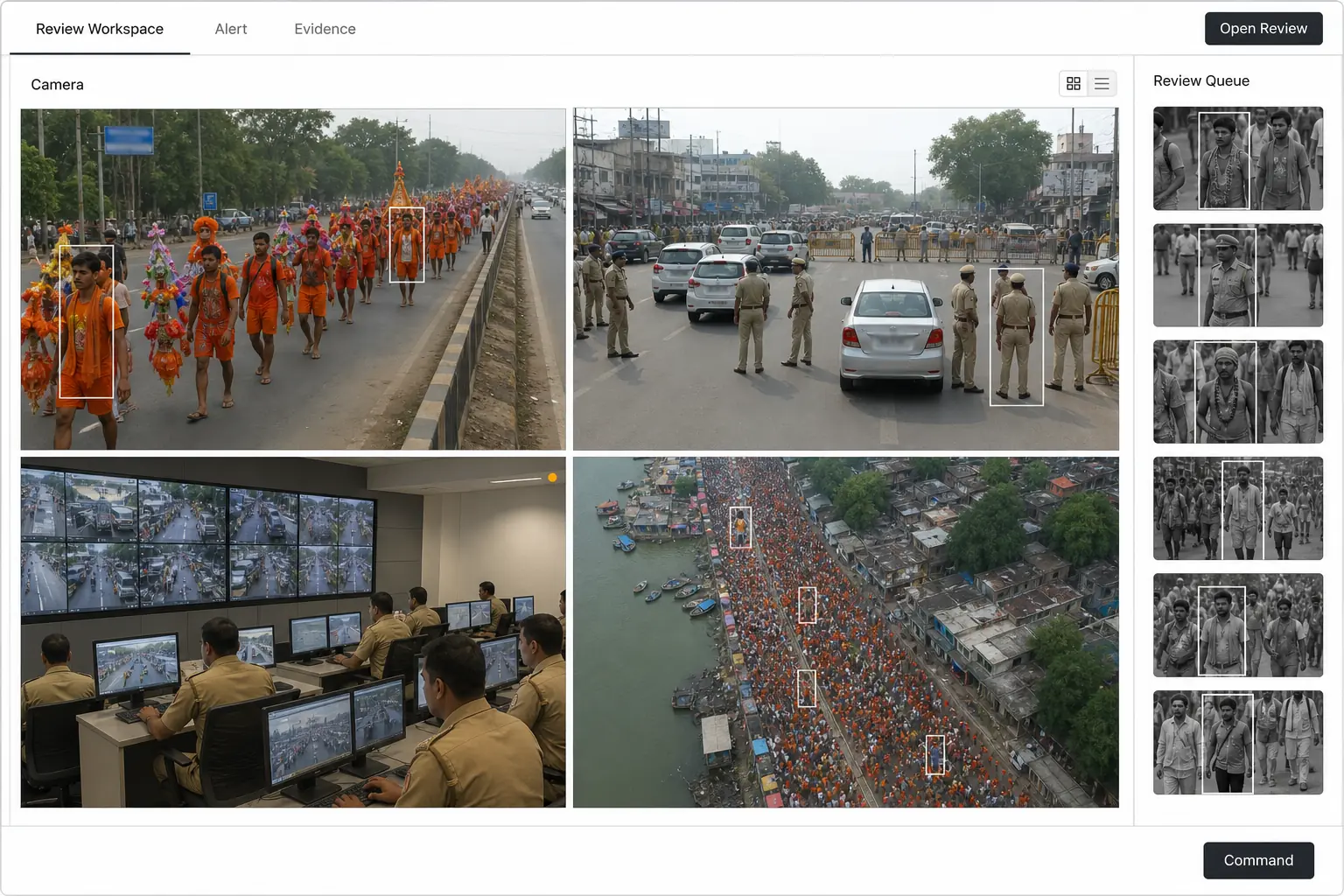
After a public-order incident there is rarely one camera. There is CCTV from the street, drone footage from above, phone video, and material circulating online — the same person appearing for a few seconds at different angles and distances. Eagle Eye brings those sources into one workspace and surfaces the recurring candidates so investigators can compare them properly instead of scrubbing through every hour of footage.
ARGUS is deployed where the department needs it to sit, and it connects upward into AEGIS so a visual observation appears next to the incident, the map, the assigned team, and the procedure that governs it. Footage does not leave the environment the department has approved for it.
Examine AEGISHawk-Eye runs beside the camera, at a checkpoint, or inside a field kit, and keeps working when the link to headquarters does not.
Review, indexing, and evidence handling run inside departmental infrastructure where footage is not permitted to leave the premises.
Deployed in an approved Indian cloud environment under departmental accounts, or split between command and field with reconciliation once connectivity returns.
Hawk-Eye has run on the Amarnath Yatra route in Jammu and Kashmir and behind the Bareilly zonal control room during the Kanwad Yatra, where Kanwar routes and temple approaches across nine districts were watched on linked CCTV. Eagle Eye handles the review work that comes after an incident. All three sit on the same ARGUS layer.
ARGUS does not detain anyone, does not close an incident, and does not act on a match by itself. It puts a frame, its source, and its context in front of an authorised officer, and it records what that officer did with it. Access rules, retention periods, and export authority are set by the department; we configure them, we do not hold them.
Tell us what your camera and drone coverage looks like today, which checks matter on your ground, and what has to be provable afterwards. We will set out how ARGUS would be deployed against it — at the edge, on-premises, or in a sovereign environment — and what it would take to run.